The principles
Why this works
Three ideas underpin everything I teach.
Natural alignment
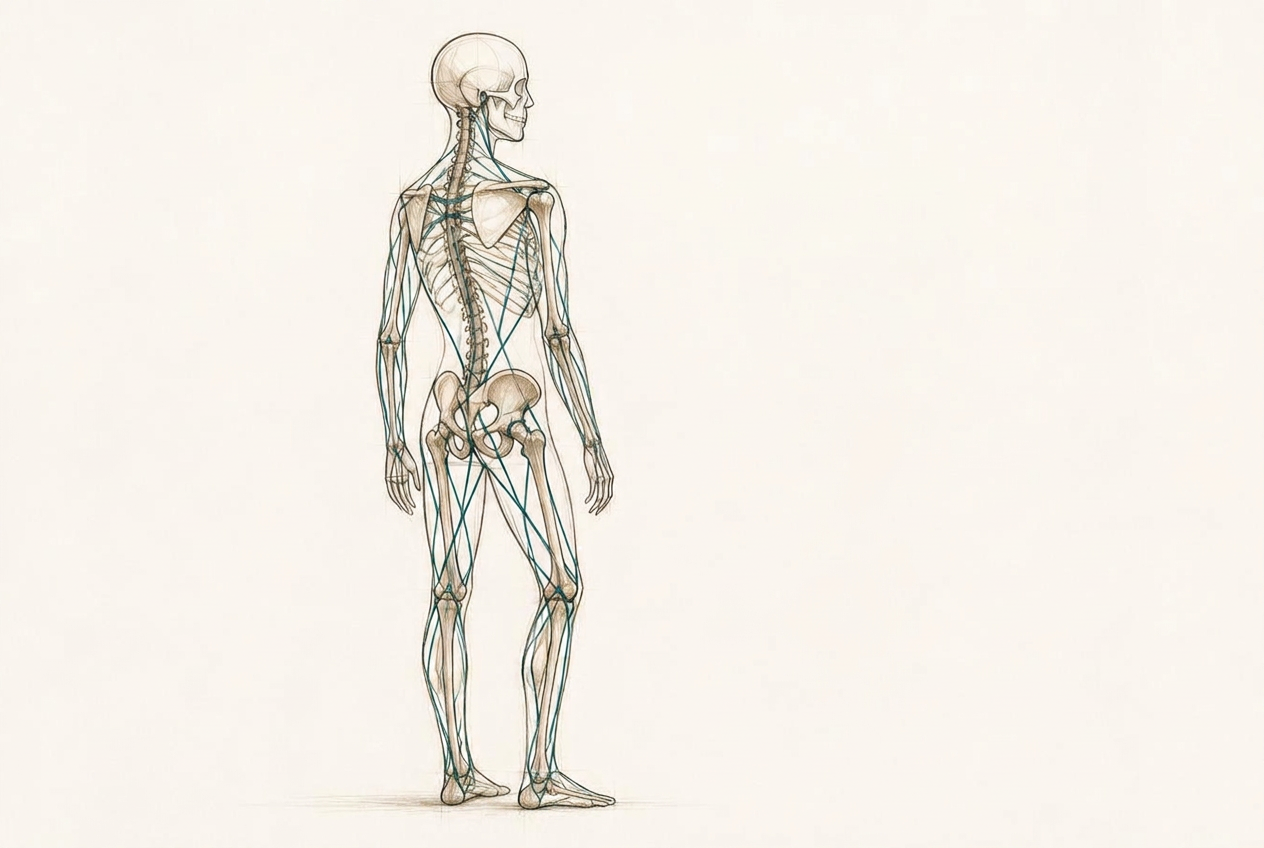
Alignment isn't a posture to hold. It's an invitation to reawaken forgotten parts and shift your posture out of holding patterns back towards an alignment that supports freedom of movement.
Fascia-informed movement
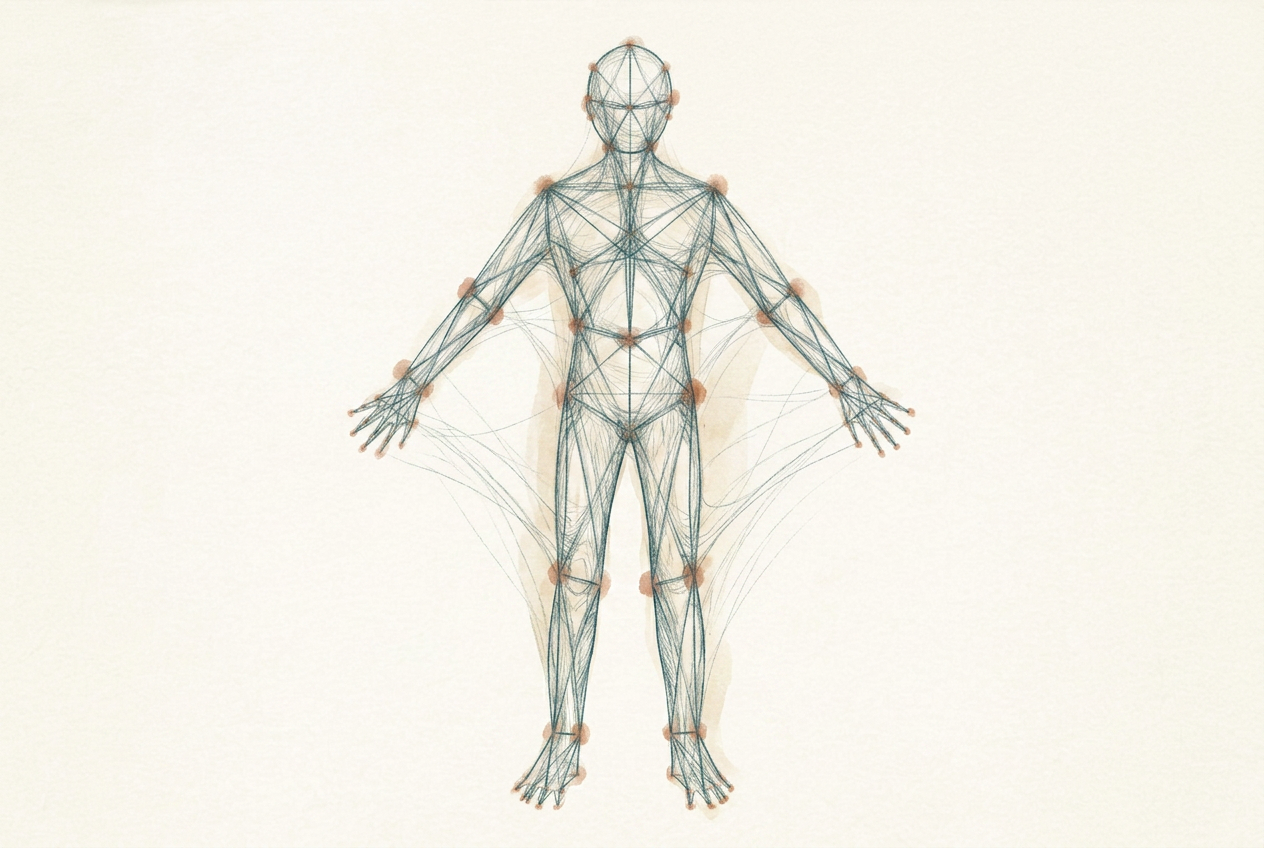
Fascia is the continuous connective tissue running through everything. It responds to how you use it, becoming resilient with varied, well-distributed load and stiff and sensitive without it. Think of it as a body suit. Our goal is to activate our body suit, reconnect all parts and move in harmony.
Tensegrity
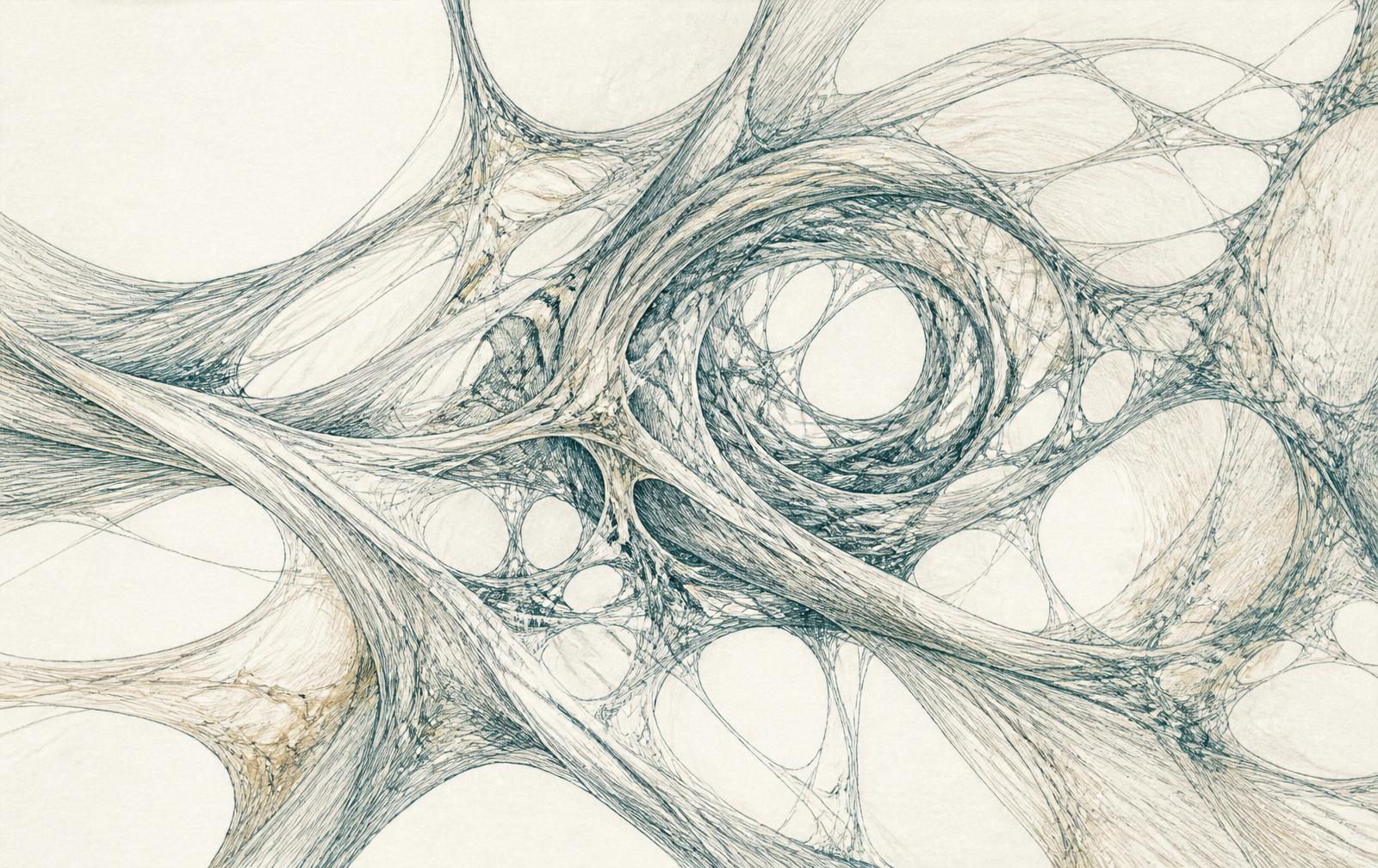
The body isn't a stack of blocks; it's a network held in balanced tension. Change one part and everything adjusts. It's why a shoulder problem often begins at the foot and why we work with the whole structure creating balance between different anchor points.
What you'll learn
You’ll explore how to:
- pulse
- hinge
- recoil
- spread your wings
- arch
- spiral
Explore movement possibilities you may not have experienced before and develop a greater awareness of how your body moves. Through exploring different ranges of motion, you can discover new movement options, work with familiar patterns in different ways and find greater freedom, ease and choice in how you move.
What informs this work
This approach is shaped by years of study in yoga, bodywork, fascial anatomy, strength training and Bowspring-inspired practice, taught in plain language that is easy to understand.
What this means in practice
Small, precise, repeatable work. Attention before effort. Strength built through range rather than around it. And an explicit goal: that you can still do what you love for as long as possible.
See it in motion
Some things are easier to see than to describe.
A moment from class — the whole body working as one connected structure.
What to do next
The principles make most sense once you've felt them. Begin with The Essentials.